

Marriage counseling usually comes up at an odd hour: 11 p.m., the kids finally asleep, the dishwasher humming, and the same argument about whose family gets the holidays having just gone another round.
Maybe it started with the hurricane shutters and who was supposed to order them. Maybe it’s the Sunday lunch in Kendall that one of you dreads. Or maybe nobody argued at all. It’s the quiet: two people on the same sofa, each with a phone, talking about the school calendar and not much else.
That’s often the moment a married couple starts wondering whether to get help. This guide covers what marriage counseling is, how it differs from couples counseling (less than you’d think), when couples go, what the first sessions look like, what it can and can’t do, and what to try if your spouse isn’t on board. It doesn’t promise a result, because nobody honestly can.
Buxani Counseling Care is a mental health clinic in Miami that sees couples in person and through telehealth across Florida. Nothing on this page can tell you what is right for your own marriage. A licensed therapist can.
What Is Marriage Counseling, and How Does It Differ From Couples Counseling?
Marriage counseling is talk therapy for married couples, led by a licensed therapist, that helps spouses communicate better, handle conflict and feel close again. Couples counseling is the same kind of help offered to any couple, married or not.
Be wary of anyone who says the two are completely different. The methods overlap almost entirely. A therapist working with spouses and a therapist working with a dating pair reach for the same toolbox: ways to listen, ways to cool a fight down, steady work on trust. Buxani Counseling Care’s couples therapy page treats marriage counseling as part of the same service, and the full guide to couples counseling covers all of it.
What changes is the life wrapped around the sessions. A marriage usually comes with things a newer relationship hasn’t piled up yet:
- A home and a budget run together, so a money argument is never really about one dinner out
- Two families with opinions about holidays, visits and who calls whom
- Children, car lines and a calendar with very little room left for the two of you
- Years of routine, which can harden into habit and, sometimes, into quiet resentment
- A future that’s hard to undo, from a mortgage to a community that knows you as a pair
A good marriage counselor keeps that bigger picture in view. The work isn’t only how the two of you talk. It’s also how you run a household together, and whether it still feels like yours.
What do married couples talk about in marriage counseling?
Whatever keeps coming between them: money, chores, the in-laws, the kids, sex, trust, or the one argument that never seems to end. You don’t have to arrive with a tidy list. The therapist helps each spouse say what’s going on and hear the other, and the topics settle as the sessions go on.
Is marriage counseling religious?
No. It’s talk therapy with a licensed therapist, not a religious service. If faith matters to either of you, say so at the start and ask how the therapist will respect it. Some couples also talk with a faith leader, and the two kinds of support can sit side by side.
Is marriage counseling the same as family counseling?
No. Marriage work centers on the two spouses and the relationship between them. Family counseling brings in the wider household, such as children or parents, and looks at how everyone fits together. Some families need both at different times.
Does Buxani Counseling Care offer marriage counseling?
Yes. The couples therapy page at Buxani Counseling Care speaks about it directly and lists premarital concerns too. Appointments are in person in Miami or through secure telehealth.
When Do Married Couples Usually Start Counseling?
Most start when something has shifted and they can’t shift it back alone. Some come sooner, before anything is badly wrong, and there’s no minimum amount of trouble required.
These are the moments that most often bring couples to the door:
- Drifting apart. Nobody’s shouting. Nobody’s really talking, either.
- The same argument on a loop, with new details and the same ending.
- A new baby, when sleep disappears and the split of chores suddenly feels unfair.
- A move, a new job or a job loss, when money becomes the only subject at dinner.
- An illness, yours, your spouse’s or a parent’s, that changes who does what.
- A breach of trust, such as an affair or a hidden debt, when it’s hard to know where to start.
Others come before any of that: after the wedding, ahead of a big move, when the last child is about to leave, or simply because they’d like to keep a good marriage good. The couples page at Buxani Counseling Care says plainly that counseling isn’t only for couples in serious trouble.
Waiting has a cost, though. Resentment collects quietly, and by the time one spouse says “I’m done,” the other often never saw it coming. If sessions feel like too big a step today, the marriage counseling tips page and the eight habits in the guide to a healthy couple relationship are places to start at home.
What If One Spouse Doesn’t Want to Go?
Asking gently, and sometimes more than once, tends to work better than pushing. If the answer stays no, the spouse who is willing can still begin with individual therapy.
The reasons behind a no are usually human, not stubborn. “It means I’m the problem.” “I don’t want a stranger hearing about my marriage.” “Talking never fixes anything.” Finding out which one it is helps more than winning the argument.
A gentler way to ask:
- Choose a calm, ordinary moment. Not mid-argument, not at midnight, not in front of the kids.
- Start with what you want instead of what they do wrong. “I miss talking to you and I’d like some help getting back there” lands very differently from “You never listen.”
- Say that a first appointment is just a chance to see how it feels.
- Hand over a piece of the decision: the day, the counselor, in person or by video.
- Skip the ultimatum. “Come with me or I’m done” can win a yes in the moment and little else.
If it’s still no, that isn’t the end of the road. You can begin individual therapy on your own. Alone, you can’t repair a marriage, and a counselor can’t do it for you either. What you can do is sort out what you want, change how you step into the same old argument and look after yourself in the meantime. Sometimes a spouse gets curious once they notice a difference at home. Sometimes not. Either way, you won’t be sitting alone with it.
Is it too late for marriage counseling?
There’s no cutoff date. Couples start after months of distance, after years, even after one spouse has said the word divorce. It’s harder when one person has fully checked out, but counseling can still bring more clarity, whether the answer turns out to be repair or a calmer ending.
Should a couple tell the kids or relatives they’re going to counseling?
That’s up to the two of you. Children don’t need details, and a simple line like “Mom and Dad are getting help to work as a team” is usually plenty. With relatives, many couples keep it private, partly so nobody takes sides or asks for an update after every session.
Can marriage counseling help with in-law problems?
It can. The in-laws usually aren’t in the room. The work happens between the two spouses: getting on the same page about visits, advice and boundaries, and learning to back each other up when a parent crosses a line. If the whole family needs to be involved, family therapy is a different service.
Can married couples in Florida join Buxani Counseling Care sessions online?
Yes. Buxani Counseling Care offers secure telehealth for people across Florida, and its couples therapy page says couples sessions are available online as well as in person in Miami. Telehealth sessions run on a secure video platform and work on any device with a camera and an internet connection.
What Happens in the First Sessions?
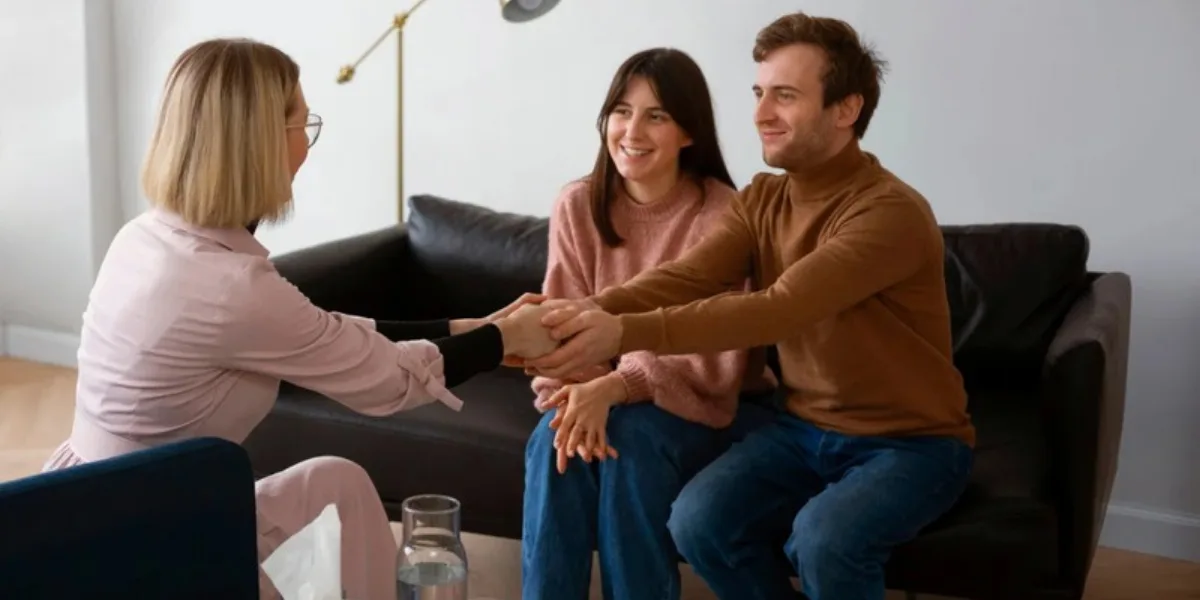
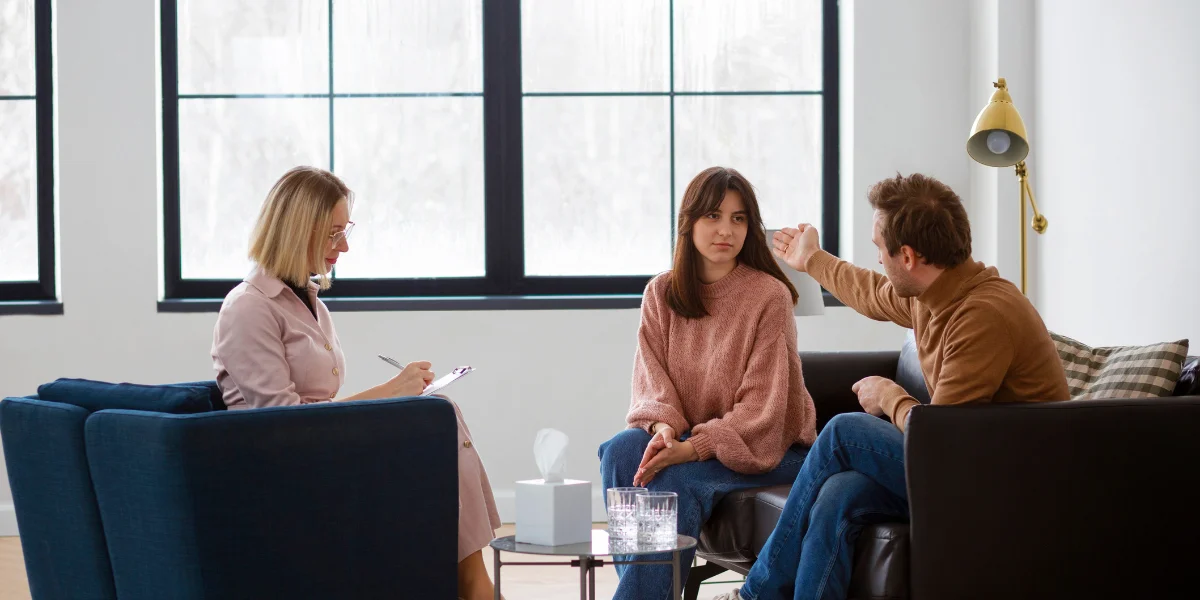
The first session is mostly listening. The therapist gets to know the two of you, what’s hard right now and what you hope will change, and nobody is expected to arrive with answers.
Buxani Counseling Care describes its couples work as a path with a few clear stages, and it starts before anyone sits down:
1A short form first
Before the first visit, the clinic’s online form asks how long you’ve been together, your top concerns and what you hope counseling will do. It also asks one safety question about physical harm between partners.
2The first session
The therapist learns about the relationship’s history, each spouse’s emotional concerns, how the two of you communicate and what you want from the work.
3Seeing the patterns
Together you look for the habits behind the fights: unhealthy ways of talking, emotional triggers, the same conflict in a new outfit.
4Building new habits
Listening, saying what you need and working through a disagreement, practiced in the room and tried at home between sessions.
5Rebuilding closeness
Trust, intimacy and emotional safety get attention, and later the focus turns to coping skills for the long run.
Later sessions tend to follow a rhythm: a check-in on the week, one issue to work on, a skill to practice and a small goal before the next visit. The post on how couples counseling works lays out a typical session in more detail.
As for methods, the couples page names the Gottman Method, cognitive behavioral therapy, mindfulness-based work and solution-focused therapy, mixed to fit the couple. If the first one interests you, see the guide to Gottman therapy for couples. For the everyday tools therapists teach, see couples therapy techniques.
A counselor isn’t a referee handing out points for who’s right. The aim is for each of you to feel heard, and for the pattern between you, not the other person, to become the problem you work on.
Can Marriage Counseling Save a Marriage? What It Can and Can’t Do
Marriage counseling can give a couple better tools and a calmer place to talk, but it can’t promise a marriage will last, and an honest counselor won’t.
The research is encouraging, with limits. A review of research from 2010 to 2019 in the Journal of Marital and Family Therapy classed several couple therapies, including emotionally focused and cognitive behavioral approaches, as well established for relationship distress. That describes groups of couples, not yours. How it goes in any one marriage depends on how willing both spouses are, what they’re facing and how long things have been hard.
At its best, it can slow an argument down before it turns into the usual fight. It can help you talk about money, in-laws or intimacy without the talk becoming a verdict on someone’s character. It can offer a way back after a breach of trust, slowly and with effort from both sides, and it can show each of you your own part in the pattern. What it can’t do is make a spouse want to change, decide for you, repair years of hurt in a few visits, or stand in for legal and medical advice.
Sometimes the outcome is a clearer decision. A couple who arrive unsure may leave certain they’re staying, and knowing what has to change. Or certain it’s ending, and wanting to end it without scorched earth, especially with children in the picture. That isn’t counseling failing. It’s an answer. If one of you is already leaning toward the door, say so when you book, so the first conversation can be about what fits.
When Safety Comes First
If you’re afraid of your spouse, or there are threats, control over money or movement, or any violence, marriage counseling is not the first step. In joint sessions the person being hurt may not be able to speak freely, and what is said in the room can bring trouble at home. Safety comes first, and the right first step is usually help for the person being hurt, one-on-one.
The National Domestic Violence Hotline is free, confidential and open every hour of the day: call 1-800-799-7233, text START to 88788, or chat at thehotline.org. Its site warns that internet use can be monitored and suggests calling if that’s a worry. In an emergency, call 911.
If things have felt so heavy that you’ve had thoughts of ending your life, call or text 988, the 988 Suicide & Crisis Lifeline, or call 911 in an emergency.
What is the success rate of marriage counseling?
No single number fits every couple, so be wary of any page that offers one. Studies describe how groups of couples do on average, and your result depends on how willing both spouses are, what you’re facing and what counts as success. For some couples it’s a closer marriage. For others it’s a clear decision made with less damage.
Is counseling worth it if one spouse is leaning toward divorce?
It can be, if both of you are willing to be honest about where you stand. Counseling won’t change a firm decision, but it can help you understand what’s happening, decide with more clarity and, if you do separate, handle it with respect, especially when children are involved. Legal questions belong with a family lawyer.
Is marriage counseling confidential?
Therapists treat what’s said in sessions as private, within limits set by law, such as serious safety concerns. Ask the therapist to explain those limits in the first session, including how they handle anything one spouse tells them outside the joint sessions.
Does Buxani Counseling Care ask about safety before couples sessions?
Yes. The online form on the couples therapy page includes a question about whether either partner has struck, physically restrained, used violence against or injured the other. Safety is raised before the first appointment, not after.
Culture, Faith and Family Expectations
Good marriage counseling works inside your values, not around them.
Marriage looks different from one home to the next. In some, a grandmother lives down the hall and her opinion counts. In others, a cousin’s wedding sets the calendar for a month, one spouse prays every morning and the other doesn’t, or two languages share one dinner table. None of that is a problem to be fixed. It’s the ground the marriage stands on.
Tell the counselor early what matters to each of you: which traditions, which expectations from elders, what faith means in daily life. The job is to help you work with those things, not talk you out of them. If it ever feels like someone is steering you toward a way of living you don’t hold, say so. Fit matters.
The couples page at Buxani Counseling Care lists family or cultural pressures among the concerns couples bring and describes its sessions as a supportive, judgment-free space. The clinic also lists counseling for the LGBTQ+ community among its services, so same-sex married couples can ask about marriage counseling there too.

Marriage Counseling in Miami at Buxani Counseling Care
Buxani Counseling Care is at 9700 S Dixie Hwy #880, Miami, FL 33156. Married couples can meet a licensed therapist there in person, or join a secure telehealth session from anywhere in Florida. The couples page lists service areas that include Pinecrest, Coral Gables, Kendall, Brickell, Coconut Grove, South Miami, Miami Beach and Doral, and the page on therapy for couples in Miami has the details.
Whichever format you pick, a few things are worth looking for: a licensed therapist, a clear explanation of how sessions work, and a room, or a video call, where both of you feel heard. At Buxani Counseling Care the first step is the short online form, then a time through the therapy appointment page. Telehealth can suit spouses with long commutes, a baby asleep upstairs or a hurricane-season schedule that never quite settles.
Final Takeaway
You don’t need a crisis to ask for help, and asking doesn’t mean the marriage is failing. It means you’re willing to look at it with someone trained to help.
Marriage counseling uses much the same toolbox as couples counseling, applied to a life two people built together: the house, the money, the families, the kids, the years. It can’t promise a result. It can offer a calmer room, better ways to talk and, sometimes, a clearer answer.
If your spouse isn’t ready, begin on your own. If there’s fear at home, put safety first and call the hotline. And if you’re simply tired of the same loop, one appointment is a fair place to start.
The hardest part is usually the first call, and it’s smaller than it looks.
Frequently Asked Questions About Marriage Counseling
How do I choose a marriage counselor?
Look for a licensed therapist who explains how sessions work in plain language, who sees couples regularly and whom both of you feel comfortable talking to. Fit matters as much as the résumé. After the first session, each of you can ask yourself one question: did I feel heard? If either answer is no, it’s fine to try someone else.
What if one spouse does most of the talking in sessions?
It happens. A good therapist notices and steers the conversation so each person gets a turn, and it helps to say out loud, “I’m not getting a turn.” The quieter spouse isn’t doing anything wrong. Some people take longer to find words, especially for feelings.
How can you tell counseling is working?
Look for small shifts instead of one big one: an argument that cools faster, an apology that lands, a conversation you used to avoid that you can now have. Progress is rarely a straight line, and a hard session doesn’t mean it’s failing. If you aren’t sure after a few visits, ask the therapist what they’re seeing.
What can a couple try at home before starting counseling?
Pick a calm, regular time to talk with phones put away, start with something you appreciate, and describe how you feel instead of what your spouse did wrong. The marriage counseling tips page on the Buxani site has more ideas. Home practice is no substitute for help if there’s fear, control or violence.
Can marriage counseling help with money arguments?
It can help a couple talk about money without every talk turning into a verdict on character: who spends, who saves, who decides, what each of you learned about money growing up. A counselor isn’t a financial planner, though, and budgets, debt plans and taxes are for a financial professional.
Is marriage counseling a good idea if I’m afraid of my spouse?
Not as the first step. If there are threats, control or violence, safety comes first, and joint sessions can put the person being hurt at risk. Call the National Domestic Violence Hotline at 1-800-799-7233, or 911 in an emergency, and consider one-on-one support to plan what comes next.
Does Buxani Counseling Care help couples with family or cultural pressures?
Family or cultural pressures are listed on the couples therapy page among the concerns couples bring to Buxani Counseling Care, and sessions are described as a supportive, judgment-free space. It helps to tell the therapist early which traditions, languages or beliefs matter to you.
How do I book a first appointment at Buxani Counseling Care?
Use the therapy appointment page on the Buxani website to ask for a time, in person in Miami or by telehealth. For couples there’s a short online form first, with questions about the relationship, your main concerns and your goals.
Written and reviewed by a licensed mental health therapist.
