

A couple relationship in Miami can run for weeks on logistics alone. Who’s doing the car line on Thursday, who’s calling your mother-in-law back, whether the hurricane shutters are sorted, and what to do about dinner at 9 p.m. when you both walked in at 8:30.
Somewhere in there, the two of you stopped talking like people who actually like each other. Nobody decided that. One of you switches between English and Spanish all day, the other is answering work messages at the stove, and by bedtime the best you can manage is “Did you lock the door?”
If that sounds familiar, nothing is wrong with you or your partner. Busy seasons wear on every couple, and the fixes are mostly small ones you can start this week.
This guide gives you eight practical tips for a healthier, closer bond, a plain look at warning signs, and a straight answer on when talking to a counselor makes sense. Buxani Counseling Care, a mental health clinic in Miami, offers couples therapy in person and by telehealth, and the last section explains what that looks like.
What Is a Healthy Couple Relationship?
A healthy couple relationship is one where both partners feel respected, heard and safe, even when they disagree. It has much less to do with never arguing and much more to do with how you treat each other when you do.
The National Domestic Violence Hotline describes healthy relationships in everyday terms: talking openly about problems, believing each other without having to prove it, and making decisions together. In practice, that tends to look like this:
- You can raise a problem without bracing for the reaction.
- You apologize, and you accept apologies, without keeping score.
- Each of you has friends, interests and time that aren’t up for negotiation.
- Money, kids and holidays get decided together, not announced.
- When something good happens, your partner is one of the first people you tell.
Healthy doesn’t mean even every single day. Some weeks one partner carries more: a newborn, a sick parent, a work deadline, a storm cleanup. What matters is whether it evens out over time and whether the person carrying more feels noticed.
It also doesn’t mean you love in the same way. One partner shows care by quietly fixing the car and paying the bills. The other shows it by talking through every feeling. Neither is wrong, but each of you needs to know how the other says “I love you.”
What makes a couple relationship healthy?
Respect, honest conversation and the feeling that you’re on the same team. Healthy doesn’t mean you never argue. It means arguments leave neither of you feeling unsafe or small.
Is it normal for couples to argue?
Yes. Two people with different histories, habits and stress levels will disagree. What matters is how you argue and how you repair afterward. Fights that include threats, name-calling meant to hurt or fear are a different matter, and the safety note further down covers that.
How much time should couples spend together?
There’s no right number. Short, regular, undistracted time often does more than one big weekend a month. Ten phone-free minutes a day is a reasonable start, and you can build from there.
Do couples have to be in crisis to see a counselor at Buxani Counseling Care?
No. The couples therapy page at Buxani Counseling Care says couples don’t have to be in crisis to come in. It lists concerns such as trust, emotional distance, jealousy and communication problems, and premarital counseling is on the list too.
8 Tips for Building a Stronger Couple Relationship
These eight habits are small enough to start this week: listening, small daily moments, shared activities, knowing the warning signs, appreciation, keeping your own identity, fighting fair and a regular check-in. Pick one. Trying all eight at once usually lasts until Thursday.

1. Listen to understand before you answer
Say back what you heard before you reply. Most people listen while they build their answer, so this feels slow at first. When your partner finishes, put it in your own words: “So you felt brushed off when I took that call during dinner.” Then ask, “Did I get that right?”
It can take the heat out of an argument, because a lot of fights are really two people who never felt heard. Phones face down, one person talking at a time, and nobody tries to fix anything until the other says “yes, that’s it.”
The same goes for a bilingual home. Say the tender thing in the language where it lives, then explain it if your partner needs you to.

2. Protect the small moments
Closeness gets built in minutes, not weekends. A kiss at the door, a text at lunch, coffee on the balcony before the house wakes up.
A planned date night is great. But if that’s the only time you connect, the other six days run on autopilot. Think small and repeatable instead: ten minutes on the couch after the kids are down, phones in another room. A voice note from the car line. Cooking dinner together with music on, even if dinner is reheated leftovers.
In stressful stretches like storm prep or a work crunch, the “who’s handling what” conversations can crowd out everything else. Say it out loud: “This week is all logistics. I still like you.” It sounds silly, and it helps.
3. Do something together that isn’t a chore
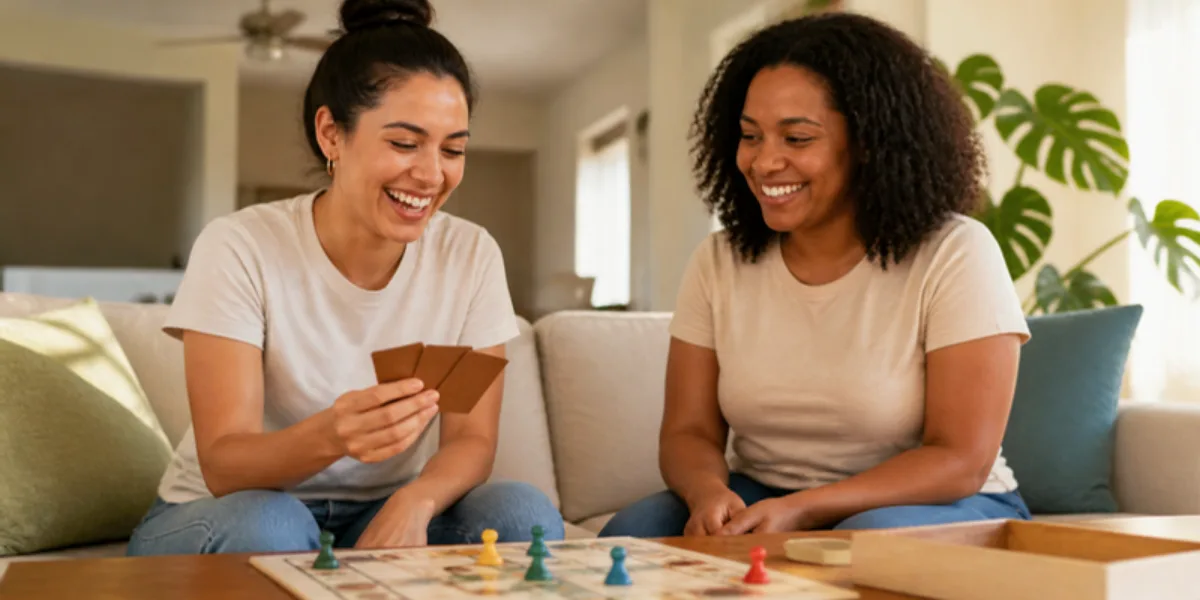
Shared activities give you something to do with each other that isn’t logistics. They don’t need to be big. Cook a recipe from one of your families. Walk the boardwalk at sunset. Pull out a board game or a deck of cards, where losing gracefully counts as practice. Take a class neither of you has tried.
Take turns choosing. If one person plans every outing, it turns into another job on their list. And if you’d like something more structured, Buxani Counseling Care lists therapy activities for couples and relationship therapy exercises you can try at home.
How can couples communicate better?
Start with one habit: say back what you heard before you reply. “You felt left out when I made plans without asking, right?” Then answer. Add “I” statements and a weekly check-in once that feels natural, and keep phones out of the room.
Do small daily moments really matter?
For a lot of couples, yes. A shared coffee or a text at lunch tells your partner “you’re on my mind” without costing an evening. They’re also easier to keep up than big gestures.
What are good relationship activities for couples at home?
Cooking a new recipe together, an evening walk, a board game or cards, a shared playlist, or a weekly chat about what felt good that week. Choose something you both enjoy, not something one of you does to keep the other happy.
Does Buxani Counseling Care teach couples communication skills?
Its couples therapy page lists active listening exercises, communication skills training and conflict resolution among the techniques therapists may use. It also says couples can learn practical techniques to use at home between sessions.
4. Know the Signs of an Unhealthy Relationship
Every couple has bad weeks. A pattern is different: the same hurtful behavior again and again, especially when it leaves one partner feeling small, afraid or cut off from other people.
This table isn’t a test, and it can’t tell you what your relationship is. Use it as a way to notice.
| Area | What a healthy pattern looks like | A pattern worth taking seriously |
|---|---|---|
| Disagreements | You can disagree and still feel respected. | Name-calling, mocking or days of silent treatment. |
| Decisions | Big choices about money, kids and plans are made together. | One partner makes the calls and brushes off the other’s input. |
| Friends and family | Each of you keeps your own people. | One partner is pulled away from friends or family, or has to account for every outing. |
| Trust | You take each other at your word. | Regular checking of phones, messages or location. |
| After a fight | Someone repairs, even clumsily. | One person is blamed every time, or the subject is never allowed back up. |
If one or two rows sound like you, that isn’t a verdict. It’s a reason to talk, with your partner, a counselor or someone you trust.
When Safety Comes First
If a partner is controlling, threatens you, or has hurt you or someone you love, safety comes first, and couples counseling is not the right first step. Counseling puts both partners in one room to talk openly, and that isn’t safe when one person is afraid of the other.
The National Domestic Violence Hotline offers free, confidential support at any hour. You can call 1-800-799-7233 (800-799-SAFE) or text START to 88788. If you’re in danger right now, call 911. And if thoughts of harming yourself come up at any point, call or text 988 (Suicide & Crisis Lifeline).
5. Say thank you in a specific way
Appreciation works best when it’s specific. “Thanks for dinner” is fine. “Thanks for picking up my mom’s prescription, I know that wasn’t on your list” lands differently.
Once a day, notice one thing your partner did and say it out loud. The tiny stuff counts most: the person who always refills the water filter, or turns the AC down before you get home. And if you’re the one running low on appreciation, ask for it with an “I” sentence instead of a complaint: “I’ve been feeling a bit invisible lately, and I’d like to hear what you notice.”
6. Keep your own identity
A healthy relationship has two whole people in it. Keep the friend night, the Sunday pickup game, the book club, the quiet hour with your own thoughts. Time apart isn’t a verdict on the relationship. Often it’s what gives you something to talk about.
In-laws are part of this. If a parent’s comments keep landing on one of you, the partner who grew up in that family is usually the best person to say something, with the other one backing them up. Decide together how much time, money and say each family gets, then stand behind that.
7. Handle conflict with care
Timing matters as much as wording. Raising something at 11 p.m. when you’re both wrecked rarely goes well. “Is tomorrow after dinner a good time to talk about the weekend plans?” gives you both a chance to show up ready.
Then use “I” statements: “I feel overwhelmed when the dishes pile up, and I’d like to find a different split.” That’s easier to hear than “You never help.” Stick to one issue, leave old fights where they are, and if voices rise, take a break. Say “I need twenty minutes, and I’ll come back to this,” and then actually come back.
After a rough one, repair. A hug, “I’m sorry for how I said that,” or a joke only the two of you get.
Repair counts for more than winning.
8. Schedule a weekly check-in
Once a week, take twenty minutes just for the two of you, on the couch or on a walk. First, deal with the calendar so it’s out of the way. Then ask each other two questions: “What felt good this week?” and “What would help most next week?”
It keeps small resentments from piling up into one big one. It’s also the first thing couples drop when life gets full, so put it in the calendar the way you would a doctor’s appointment.
What are common signs of an unhealthy relationship?
Ongoing criticism or mocking, one partner controlling money, phones or friendships, fear of the other person’s reaction, and blame that always lands on the same side. One bad day isn’t a pattern, but a pattern deserves attention. If you feel afraid, see the safety note above and consider calling the hotline listed there.
How do I ask my partner for more appreciation without starting a fight?
Pick a calm moment and describe how you feel instead of what they did wrong. “I’ve been feeling a bit invisible this week, and I’d like to hear what you notice” goes over better than “You never say thank you.” Saying thank you first, when you can, helps too.
How do you keep your own identity in a relationship?
Keep one thing that’s yours: a friend night, a class, a workout, a faith community. Tell your partner what it gives you. Time apart isn’t a warning sign by itself.
Does Buxani Counseling Care help couples with trust and conflict?
Yes. Its couples therapy page lists trust concerns, jealousy and communication problems among the reasons couples come, and conflict resolution and trust-building strategies among the techniques. No counselor can promise how it turns out, but it gives you a structured place to work on it.
When Is It Time to Try Couples Counseling?
Consider couples counseling when the same argument keeps coming back, when you only talk about logistics, when trust has been hurt, or when a big change is making things harder. You don’t have to wait for a crisis.
Big changes might be a new baby, a move, a parent coming to live with you, a job loss or the first year of a marriage. Some couples also go before a wedding, just to practice talking about money and family.
Signs that home habits may not be enough:
- You’ve tried the tips above and keep landing in the same fight.
- One of you has started to feel more like a roommate than a partner.
- Trust has been broken and neither of you knows how to rebuild it.
- You avoid certain topics because they always blow up.
- One of you has started wondering whether staying together makes sense.
Counseling isn’t about deciding who’s right. A counselor helps both of you say what you mean and hear what the other means. It can’t promise a particular outcome, and both partners need to be willing to take part. If only one of you is ready, starting with individual therapy is a fine first step too.

Couples Counseling in Miami at Buxani Counseling Care
Buxani Counseling Care offers couples therapy at its Miami office (9700 S Dixie Hwy #880) and by secure telehealth. Its therapy for couples in Miami page says couples come for trust concerns, emotional distance, jealousy, anxiety and communication problems, and it lists premarital counseling too. The same page says couples don’t have to be in crisis, and it names areas such as Brickell, Coral Gables, Kendall and Doral among those it serves.
The page describes a five-step process:
1Initial Consultation
The first session is about learning the couple’s relationship history and emotional concerns.
2Identifying Relationship Patterns
Spotting the communication habits, emotional triggers and behavior patterns that keep repeating.
3Building Healthier Communication
Working on how each partner expresses feelings and listens.
4Strengthening Emotional Connection
Rebuilding trust, emotional safety and mutual understanding.
5Long-Term Relationship Wellness
Developing healthier coping and stronger emotional awareness.
Therapists may use principles from the Gottman Method when appropriate, along with active listening, communication skills and conflict resolution exercises, and couples can practice skills at home between sessions. You can read more on the couples therapy and Gottman therapy pages. If you’re unsure whether couples or family counseling fits your situation, this comparison of family and couples counseling may help. When you’re ready, the therapy appointment page has a short form for booking.
Final Takeaway
Most couples don’t drift apart in one big moment. They drift in small ones: the question nobody asked, the dinner eaten in separate rooms. It works in the other direction too. Closeness gets rebuilt a few minutes at a time.
So you don’t need a perfect plan. Pick one tip from this list, tell your partner which one, and try it for a week. Saying back what you heard is a good place to start, and so is the weekly check-in.
If a partner is controlling or frightening, put safety first and reach out to the hotline mentioned above. If you’re stuck in the same loop and home habits aren’t moving it, a counselor can help you both see the pattern. Asking for that help doesn’t mean the relationship has failed.
Start with ten minutes tonight, phones away.
Frequently Asked Questions About Couple Relationships
When should a couple go to counseling?
When the same fight keeps coming back, when you only talk about logistics, when trust has been hurt, or when a big change is straining things. Sooner is usually easier than later, and you don’t need a crisis to start.
Can couples counseling help if only one partner wants to go?
Couples counseling involves both partners, so it usually starts once you’re both willing to try. If only one of you is ready, individual therapy can be a way to begin, and the other partner may join later.
Is couples counseling only for married couples?
No. Dating, engaged, living together, separated or married, couples at any stage can go.
What is Gottman therapy for couples?
It’s a couples counseling approach built on decades of relationship research, with a focus on communication, trust, handling conflict and closer emotional bonds. The Gottman therapy page at Buxani Counseling Care says therapists use it in sessions and may give worksheets so couples can practice skills between visits.
Is couples counseling a good idea if a partner is controlling or violent?
Not as a first step. When someone is afraid of their partner, safety comes first. Call the National Domestic Violence Hotline at 1-800-799-7233 or text START to 88788, and call 911 in an emergency.
How can couples reconnect when life is too busy?
Make it smaller than you think. A question at dinner that isn’t about logistics, a walk around the block, a goodnight that lasts more than a second. Then protect one weekly check-in the way you would any other appointment.
Does Buxani Counseling Care offer couples counseling in person and online?
Yes. Couples can meet in person at the Miami office on S Dixie Hwy or through secure telehealth.
How do I book a couples appointment with Buxani Counseling Care?
Use the therapy appointment page. Its short form lets you choose the type of therapy, including couples, and the page also lists a phone number and an email address.


Written and reviewed by a licensed mental health therapist.
