

People who search for couples therapy techniques are often standing in a kitchen like this one at 10 p.m. The dishwasher is humming, the kids are finally asleep, and somebody mentions the dry cleaning. Twenty minutes later it’s the same argument you had back in March.
So what would a therapist do differently in that kitchen? There’s no single magic move. Couples therapists work from a toolbox: ways to talk and listen, ways to slow a fight down, small daily habits, questions that find the hurt under the anger, and homework that carries the work into your week.
This post explains those tools in plain words and says which ones suit which problems. It also covers rebuilding trust, and the moments when safety has to come before any technique. Nothing here is about blame, and no tool comes with a guarantee.
Buxani Counseling Care, a mental health clinic in Miami, offers couples therapy in person and by telehealth in Florida. Along the way, the post notes what its own couples pages say about their approach.
Couples Therapy Techniques: What Therapists Actually Use
Therapists use a mix of skills practice, ways to calm down, and conversations about feelings and history, chosen to fit the couple’s main problem. No single technique is right for everyone, which is why most therapists blend ideas from several approaches.
Those approaches have names: behavioral couples therapy, emotion-focused therapy, the Gottman method, solution-focused therapy and others. In a real session the lines blur. A therapist might teach a listening skill early in the hour, then slow down to ask what the anger is protecting. For a closer look at one school, see the post on Gottman therapy for couples. This one stays with the tools.
The couples pages of Buxani Counseling Care describe a similar mix, with sessions personalized around each couple’s goals. New to all this? The page on couples counseling explains what it is and how to begin.
Knowing the skill is the easy part. Using it when you’re angry is the hard part.
Couples Therapy Techniques to Improve Communication
Communication tools give each partner a turn to speak, a turn to listen and a way to say hard things without starting a fight. They’re often an early focus because most of the other tools lean on them.
1Speaker and listener
One person says what’s on their mind in a few sentences. The other only listens, then says back what they heard: “So the dry cleaning felt like one more thing you handle alone?” The speaker says whether that’s right, and then you switch. It feels stiff at first. The stiffness is what slows things down enough to hear each other.
2Active listening and validation
Eyes up, phone down, one question to learn more before you answer. Validating doesn’t mean agreeing. It means saying, “I can see why that stung,” even if you remember the evening differently.
3I statements and specific asks
“I felt invisible when the plans changed without a text” lands differently than “You never think about me.” The first describes one moment and a feeling. The second is a verdict, and verdicts get defended against. Pair it with a clear ask, like “Could you text me when plans change?”, and your partner has something to do instead of something to feel bad about.
These tools suit couples who care about each other and keep missing: each is trying to explain, and neither feels heard. Most people feel a little silly the first few tries.

How a Time-Out Works When an Argument Heats Up
A time-out is an agreed pause. When voices rise, or one of you goes quiet and stony, you stop, say when you’ll come back to it, and spend the break calming down instead of building your case.
The agreement happens on a calm day, not mid-fight. Pick a word or signal that means “I need a break.” Promise to return the same day, so the break isn’t a way out. Decide what each of you does meanwhile: a walk around the block or a loop at the park, a glass of water, slow breathing. Many therapists suggest that whoever asked for the break restarts the conversation.
When you’re very upset, your heart pounds and listening gets hard. A pause gives your body time to settle so words can work again. And it isn’t the silent treatment, because your partner knows when you’ll be back.
One caution. A time-out is a tool for two people who both feel safe with each other. If one of you is afraid of the other, skip ahead to the safety section below.
What is an I statement in couples therapy?
It’s a way of describing your own feeling and the situation instead of describing your partner’s character. “I felt brushed off when my idea got skipped” is an I statement. “You never listen” is not.
Is a time-out the same as the silent treatment?
No. The silent treatment leaves the other person guessing. A time-out is announced, agreed on ahead of time and comes with a promise to return to the conversation. That promise is the difference.
What if both partners keep talking over each other?
Plenty of couples start there. Some therapists hand over a small object, like a pen or a coaster, and only the person holding it speaks. It looks a little silly and helps some couples slow down.
Which communication skills do couples practice at Buxani Counseling Care?
The clinic’s couples therapy page lists active listening exercises, communication skills training and conflict resolution techniques among its methods. A therapist can explain how they would fit your situation.

Small Positive Acts: Behavioral Exchange and Appreciation
Behavioral exchange means each partner does small, specific things the other would feel as caring, on purpose, without waiting for the big problems to be solved first. It comes from behavioral couples therapy, and it’s one of the simplest tools in the box.
It usually starts with a list. Each person writes down a few small things that would make them feel cared for: a text at lunch, a real hello at the door, a Saturday morning walk, taking over bedtime for one night. Swap lists, and each pick a few to do this week. Nobody has to feel a certain way first. The action comes first, and sometimes the warmth follows.
Therapists often pair this with noticing what’s going right: a thank-you said out loud, a note left on the counter. Couples under stress keep a running tally of what’s wrong, and appreciation gives the other column some attention. More everyday ideas are in the post on building a healthy couple relationship.
The classic fit is a couple who feel like roommates and have stopped noticing each other. It’s a weaker fit after a serious breach of trust, when small gestures can feel like too little.
Emotion-Focused Ideas: Naming the Hurt Under the Anger
Emotion-focused work looks past the argument to the feeling underneath it, often hurt, fear or loneliness, and helps each partner say that feeling out loud instead of attacking.
Take the dry cleaning fight. On the surface it’s about errands. Underneath, one partner may feel like they’re carrying the house alone, and the other may feel that nothing they do is ever good enough. Those are tender things to say, so they come out as criticism (“You never help”) and defense (“I do plenty”), and the cycle runs again.
A therapist working this way slows the moment down. What happens inside you when you hear that? What did you most need right then? Many therapists treat the loop itself as the problem, not either person, which takes pressure off blame.
It tends to come up when couples feel distant, or keep having the same fight without knowing why. It can feel exposing, so pacing matters, and it’s not something to try on your partner at 11 p.m. when you’re both worn out. Buxani Counseling Care’s couples pages list emotional regulation strategies and mindfulness-based therapy, which help each partner notice and steady their feelings.
Solution-Focused Questions: Looking at What Already Works
Solution-focused work spends less time on why the problem started and more on what you want instead, and on the moments when it’s already happening a little.
The questions are simple. If things were a bit better tomorrow, what’s the first thing you’d notice? Think of a recent day when the fight didn’t happen: what was different? On a scale of 1 to 10, where are you today, and what would move you one step up?
Therapists reach for it when a couple can describe what’s wrong in great detail but struggles to picture better. On its own it can feel thin when a deep hurt hasn’t been heard yet, which is one reason therapists mix tools.
Do small gestures matter when the problems feel big?
Sometimes, because they change the tone of an ordinary week, and warmth can make a hard talk easier to start. They won’t repair a betrayal or settle a deep disagreement on their own.
What is the miracle question?
It’s a solution-focused question: if you woke up tomorrow and the problem had vanished overnight, what’s the first thing you’d notice? Answers tend to be small and practical, like eating breakfast together, and those small things become goals.
Is emotion-focused work just talking about feelings?
Not quite. A therapist slows down one specific moment and helps each person put words to what happened inside them. A good therapist watches the pace, and you can say when it’s too much.
Does Buxani Counseling Care offer solution-focused therapy for couples?
Yes. Solution-Focused Therapy is one of the methods listed on the clinic’s couples therapy page for Miami, alongside Gottman Method therapy, cognitive behavioral therapy and mindfulness-based therapy.
Exploring Patterns From Each Partner’s History
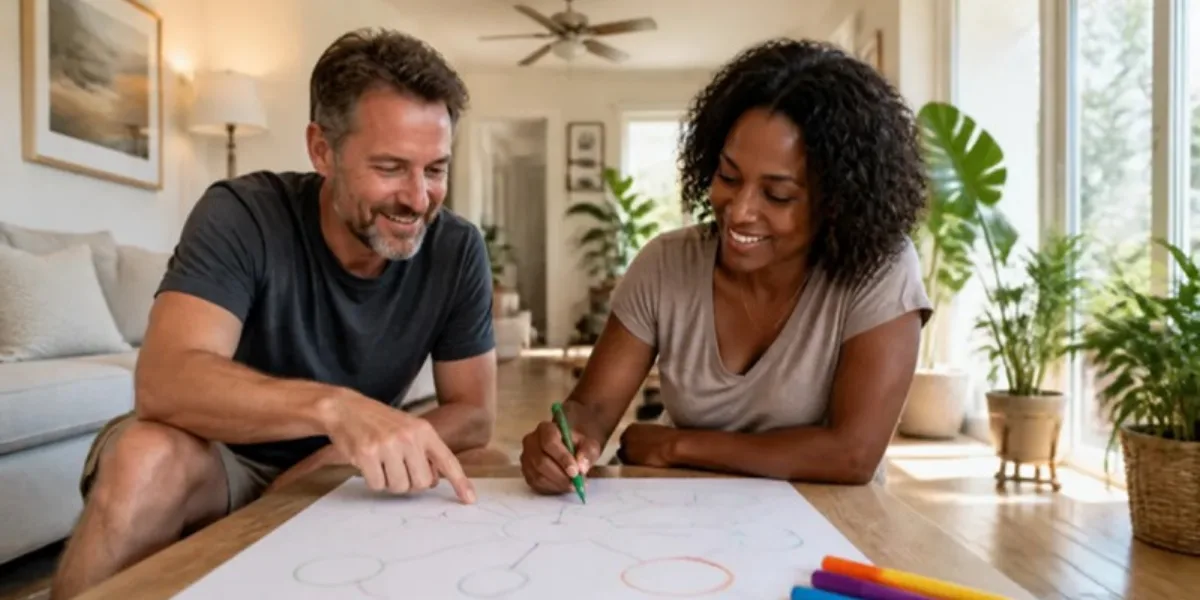
Therapists ask where each of you came from because old family patterns show up in new arguments. The point isn’t to blame anyone’s parents. It’s to understand why certain moments hit so hard.
If one partner grew up in a house where raised voices meant someone was about to leave, a loud disagreement can feel like danger. If the other grew up where silence meant punishment, a quiet evening can feel like being shut out. Neither is wrong. They’re reading the same moment through different histories. In Miami, where many households mix cultures, languages and generations, the unwritten rules each partner learned can differ more than either expected.
Mapping this out often takes the heat out of a pattern, because it stops looking like a character flaw. It comes up most with couples who have the same fight on repeat, and with anyone who says, “I don’t know why I react like this.” According to the couples page of Buxani Counseling Care, the first session works this way: therapists learn about the couple’s relationship history, emotional concerns, communication patterns, stressors and therapy goals.

Homework Between Sessions
Homework gives a couple a way to practice a skill in real life, between appointments, so the work doesn’t live only in the therapist’s office.
It’s small on purpose. Try one speaker-and-listener turn this week. Try one time-out. Do two things from your list. Write down one thing you appreciated each day. Next session, a good therapist asks what went well and where it got stuck. Skipping an assignment isn’t failing, and why it got skipped usually says something useful.
The couples page of Buxani Counseling Care says its therapists guide couples through exercises and techniques to use at home, and the clinic’s post on relationship-building activities for couples has plenty of ideas. Gentle versions, like a weekly check-in or I statements, are easy to try alone. Trust repair and emotion-focused talks go better with a guide.
Why does a couples therapist ask about my childhood?
Early family life shapes what feels safe, rude or loving later on. The questions are meant to explain today’s reactions, not to put anyone’s parents on trial.
What if one partner skips the homework?
It happens, and it’s useful information. Tell the therapist honestly, without a pile of excuses. Often the exercise needs a different shape to fit your week.
Is it normal to feel awkward practicing these tools?
Very normal. Saying a feeling out loud in front of your partner, or repeating back what you heard, feels stiff at first. It usually eases with practice.
What happens in the first couples session at Buxani Counseling Care?
The clinic’s couples page says therapists learn about the couple’s relationship history, emotional concerns, communication patterns, stressors and therapy goals. You can start from the therapy appointment page.
How Do Couples Rebuild Trust After It Breaks?
Rebuilding trust takes honest answers, steady follow-through and a clear look at what led to the break. Therapists guide it in stages, and it can end in repair, separation or a new agreement. None of those means the tools failed.
The American Psychological Association’s Monitor on Psychology describes how psychologists approach this after an affair. One framework first contains the damage, meaning secrecy ends and questions get honest answers. Then it works through what led up to the break, and finally the couple decides what the relationship looks like next. The Gottman method has its own three phases, called atone, attune and attach, covered in the post on Gottman therapy for couples. The article also notes that outcomes vary, and that a hurt partner can heal even without forgiving.
Trust breaks in other ways too: hidden spending, lies about where an evening went, promises that kept falling through. A therapist slows the questions down so they don’t become a nightly trial. The partner who broke trust practices answering without getting defensive. The hurt partner practices saying what would help them feel safer. Then come small promises kept again and again: “I said I’d be home at six, and I was.”
Nobody has to decide on day one whether to stay. Trust repair is slow, and a therapist’s guidance matters more here than anywhere else in this post.
Which Technique Fits Which Problem?
Match the tool to the trouble. If the trouble is talking, start with communication skills. If it’s the same fight, look at the pattern underneath. If it’s distance, start with small positive acts. If trust has broken, that work needs a guide.
| What it looks like | Tools that often fit |
|---|---|
| You keep missing each other and feel unheard | Speaker and listener, active listening, I statements |
| Talks turn into yelling, or one of you shuts down | Time-outs and calming down first, then a slower talk |
| It feels like you’re roommates running a household | Small positive acts, appreciation, planned time together |
| The same fight comes back in new words | Emotion-focused questions, looking at the pattern underneath |
| You can list every problem but can’t picture better | Solution-focused questions, small goals |
| Old family habits show up in your arguments | Exploring each partner’s history |
| Trust has broken | Staged trust repair with a therapist’s guidance |
| One of you is afraid of the other | Safety first. Hotline 1-800-799-7233, or 911 in an emergency |
Plenty of couples fit more than one row. Sorting out which row you’re in is part of what a therapist does in the first sessions.
When Safety Comes First
Everything above assumes two people who feel safe with each other, even when they’re angry. If that isn’t true, the order changes.
Warning signs include threats, being controlled (over money, your phone, who you see, where you can go), fear of saying what you think, or any violence. In those situations a couples session may not be the right first step. A 2022 review in an American Psychological Association journal says couples therapy is not recommended when one partner uses violence to control the other, and that protecting the person at risk comes first.
If that sounds like your home, the National Domestic Violence Hotline is free, confidential and open around the clock at 1-800-799-7233. You can also text START to 88788. If you’re in immediate danger, call 911. Nothing about this is your fault, and you don’t have to decide anything today.
The couples request form on the Buxani Counseling Care website includes a direct question about whether either partner has used violence against, or physically restrained, the other. That question is about safety.
Couples Therapy in Miami at Buxani Counseling Care
Buxani Counseling Care, at 9700 S Dixie Hwy #880 in Miami, offers couples therapy in person and by telehealth. Its couples pages list Gottman Method therapy, cognitive behavioral therapy, mindfulness-based therapy, emotional regulation strategies, communication and conflict resolution techniques, and solution-focused therapy. They name the reasons couples come in, from frequent fights and trust concerns to premarital counseling, and say couples who are doing well and want to strengthen their bond are welcome. Read more on the therapy for couples page.
If a first appointment feels daunting, the post on preparing for a therapy session can help. When you’re ready, the therapy appointment page is where to request one. Questions about cost or coverage are best answered by contacting the clinic directly.
Final Takeaway
There’s no secret technique. There’s a toolbox, and a therapist’s work is choosing what fits the couple in front of them.
Communication tools help when you keep missing each other. Time-outs help when fights get loud or cold. Small acts and appreciation rebuild warmth. Emotion-focused questions find the hurt under the anger, solution-focused questions point toward what’s next, and history work explains why some moments hit so hard.
If trust has broken, go slowly and get a guide. If you’re afraid of your partner, safety comes first, and help is a phone call away.
Try one tool this week. That’s a fine place to start.
Frequently Asked Questions About Couples Therapy Tools
What is the most effective couples therapy technique?
There isn’t one winner. The best fit depends on the problem: communication skills when you keep missing each other, emotion-focused ideas when you feel distant, careful trust work after a betrayal. Therapists usually blend several, and that’s normal.
Can you try these tools at home without a therapist?
Some of them, yes. Speaker and listener turns, I statements, a weekly check-in and thank-you notes are easy to try on your own, and the post on relationship-building activities for couples has more ideas. Trust repair, deeper emotional work and anything involving fear of a partner go better with a professional.
Will these tools work if only one partner wants therapy?
One person can still change how they listen, speak and calm down, and that can shift the pattern. The tools are built for two, though, and nobody can promise a result either way. Individual therapy is another option.
How long does couples therapy take?
It varies with the problem, how much you practice between sessions and what you want from it. A therapist can talk through what to expect once they know your situation. Nobody can honestly promise a set number of sessions up front. For the basics, see how couples counseling works.
What questions does a couples therapist ask?
Early on, usually what brought you in, what each of you hopes will change, how you handle disagreements and what has gone well. Later they get more personal: what happens inside you in a hard moment, what you needed right then and what you’ve already tried.
Can couples therapy save a relationship?
It can help partners understand each other and make a clear choice, but nobody can promise an outcome. Some couples repair and grow closer, and some decide to part. The post on when couples counseling doesn’t work covers the harder side honestly.
Does Buxani Counseling Care offer couples therapy online?
Yes. The clinic’s couples pages list in-person and telehealth couples therapy, and its telehealth page includes couples counseling among its online services in Florida.
What concerns do couples bring to Buxani Counseling Care?
The clinic’s couples page lists frequent fights, communication problems, emotional disconnection, trust and infidelity concerns, intimacy challenges, parenting stress, premarital counseling and major life transitions. It also says couples who are doing well and want to strengthen their bond are welcome.



Written and reviewed by a licensed mental health therapist.
