

Couples Counseling
Couples counseling is a collaborative therapeutic process designed to help partners navigate conflict and deepen their emotional connection. By working with a licensed professional, couples can move beyond surface-level arguments to address deep-seated patterns. Whether you are seeking to save a marriage or simply enhance a healthy partnership, this professional guidance provides the essential tools for long-term relational success.Relationship Problems and Solutions
Every partnership faces unique hurdles, but identifying specific relationship problems and solutions is the first step toward healing. Common issues like financial stress, parenting disagreements, or a toxic relationship between husband and wife can be resolved through targeted intervention. Solutions involve learning to replace criticism with curiosity, fostering understanding in relationship goals, and establishing healthy boundaries that protect both partners.Benefits of Couples Counseling
The benefits of couples counseling extend far beyond conflict resolution. It provides a dedicated space for couples spending time together with intentionality, far away from daily distractions. Partners gain a neutral perspective, learn to break destructive cycles, and develop increased empathy. For many, these sessions transform their dynamic, leading them to become happy couples with a resilient, secure attachment.Types of Couples Counseling
Specialized therapy addresses specific needs, such as married couples counseling for long-term stability or couples counseling for cheating to repair broken trust. Other forms include couples counseling for long distance relationships and couples counseling for separation, which helps partners navigate transitions with dignity. Understanding these options ensures you receive the exact support needed for your current stage of life.Marriage Counseling Sessions
During marriage counseling sessions, you will engage in structured dialogue and emotional bonding activities for couples. A typical couples counseling session involves identifying “triggers” and practicing new communication skills in a safe environment. By consistently attending couples counseling for marriage, partners learn to foster a healthy relationship between husband and wife, ensuring that both individuals feel valued, heard, and supported.
Relationship dynamics are complex. Whether you are in the “honeymoon phase” or have been married for decades, every partnership encounters friction. While some couples navigate these waters alone, many find that couples counseling is the bridge between a breaking point and a breakthrough.
Navigating relationship challenges for couples requires more than just love; it requires a toolkit of communication and emotional intelligence. This guide explores what marriage counseling sessions actually look like, the signs of a toxic relationship between husband and wife, and how professional intervention fosters a healthy relationship between husband and wife.
What is Couples Counseling?

Couples counseling (also known as couples therapy or married couples counseling) is a form of psychotherapy designed to help partners improve their romantic bond and resolve interpersonal conflicts. Unlike individual therapy, the “client” in this scenario is the relationship itself.
In a typical couples counseling session, a licensed professional provides a neutral, safe space for both partners to express their feelings. Whether you are seeking couples counseling for relationship problems or looking for couples counseling for marriage longevity, the goal is to shift the ecosystem of the partnership from one of friction to one of support.
When to Seek Help: Identifying Relationship Problems and Solutions
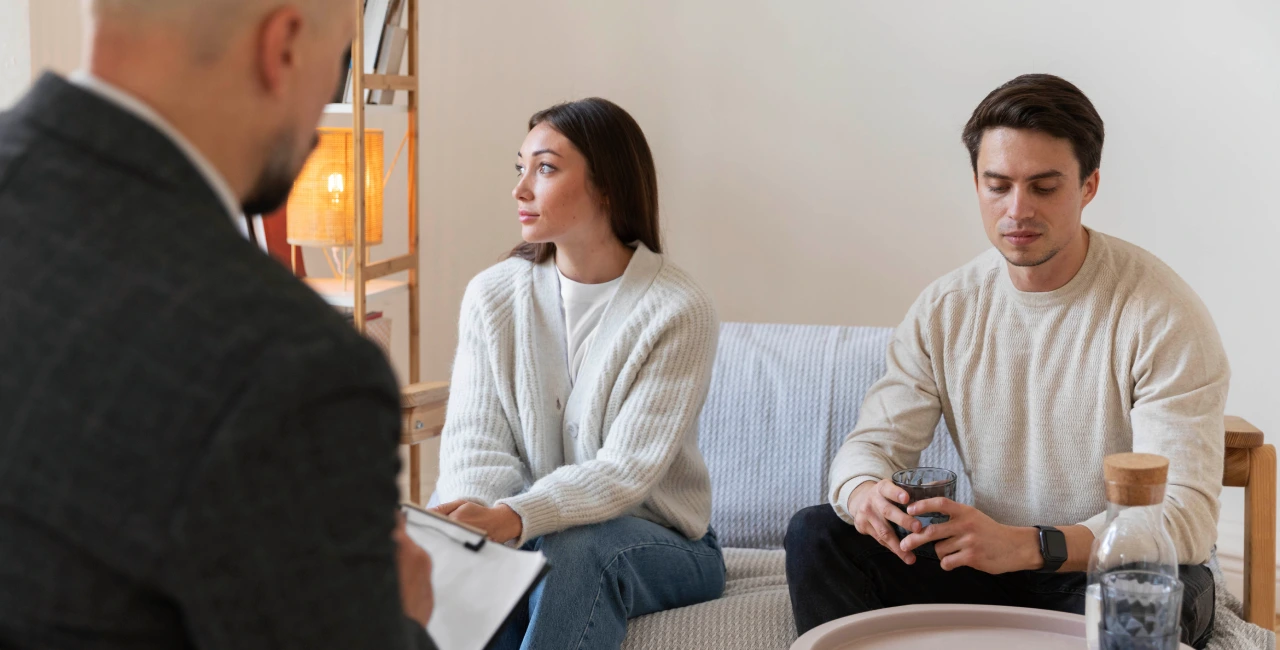
Many couples wait until they are on the brink of divorce before seeking help. However, therapy is most effective when used as a proactive tool to address relationship problems and solutions before they become permanent.
1. Chronic Communication Breakdowns
If every conversation turns into a circular argument, couples counseling for communication is essential. A therapist acts as a translator, helping both individuals find understanding in relationship dynamics that were previously clouded by ego or hurt.
2. Infidelity and Breaches of Trust
Rebuilding after a betrayal is one of the hardest relationship challenges for couples. Couples counseling for cheating provides a structured environment to process the trauma, understand the root causes, and determine if the trust can be painstakingly rebuilt.
3. Navigating Separation or Long Distance
Not all therapy is about staying together in the traditional sense. Couples counseling for separation can help partners part ways with dignity and minimal collateral damage. Similarly, couples counseling for long distance relationships helps partners maintain emotional bonding activities for couples despite the physical miles between them.
4. The Rise of Toxic Patterns
A toxic relationship between husband and wife is characterized by contempt, defensiveness, and stonewalling. Recognizing these “Four Horsemen” early in marriage counseling sessions can prevent the total erosion of the bond.
The Core Benefits of Couples Counseling
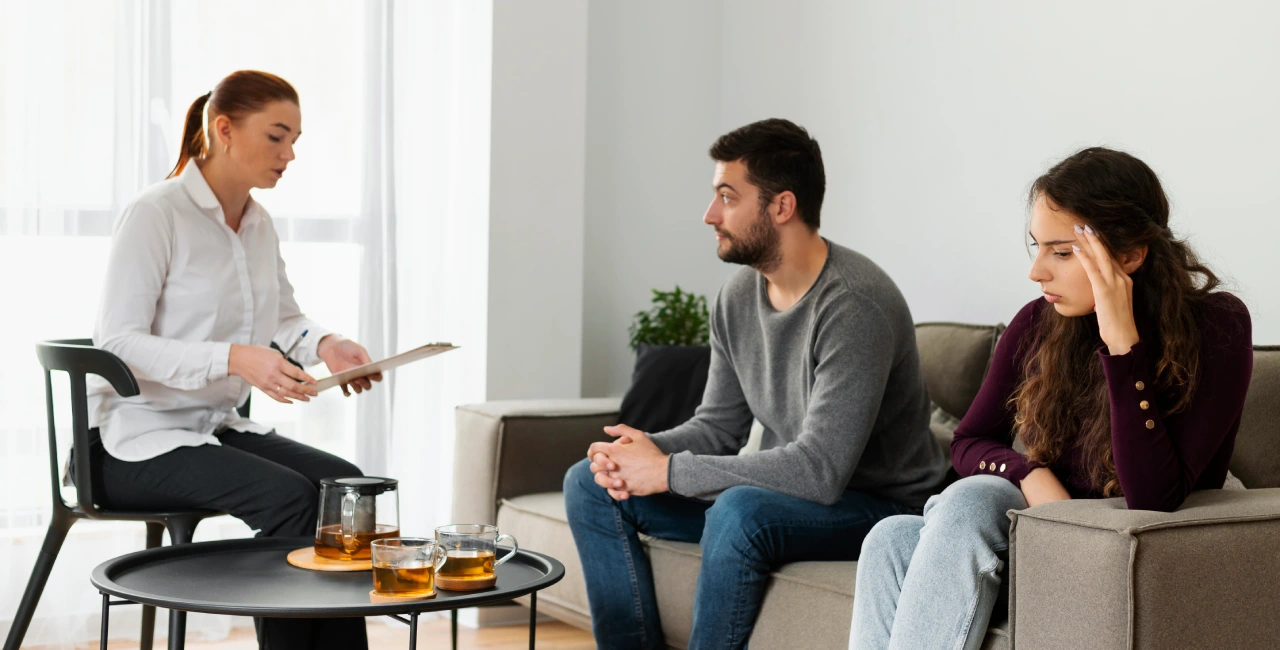
The benefits of couples counseling extend far beyond simply “stopping the fighting.” It provides a framework for happy couples to maintain their connection over decades.
Feature | Impact on the Relationship |
Neutral Mediation | Prevents one partner from feeling "ganged up on." |
Skill Building | Provides practical tools for couples spending time together effectively. |
Emotional Safety | Encourages vulnerability, which is the key to a healthy relationship between husband and wife. |
Rescripting Narratives | Helps partners move away from "blame" and toward shared goals. |
How to Foster Understanding in Relationship Dynamics
A major focus of any couples counseling session is increasing the “emotional bank account” of the pair. This involves more than just a weekly date night; it requires intentional emotional bonding activities for couples, such as:
1. Active Listening Exercises:
Repeating what your partner said to ensure they feel heard before you respond.
Repeating what your partner said to ensure they feel heard before you respond.
2. The “Six-Second Kiss”:
A Gottman-approved method to maintain physical connection.
A Gottman-approved method to maintain physical connection.
3. Shared Meaning Creation:
Discussing long-term dreams and values to ensure you are moving in the same direction.
Discussing long-term dreams and values to ensure you are moving in the same direction.
By prioritizing couples spending time together in a way that is meaningful not just logistical you move closer to the habits of truly happy couples.
Different Types of Couples Counseling
A skilled licensed couples therapist will assess your specific situation whether you are dealing with relationship problems and solutions or preparing for a life-long commitment and choose a modality that fits your unique stage of life. Here is an explanation of the specialized types of couples counseling, refined to remove duplicates and focus on distinct goals:
1. Married Couples Counseling
This is the most common form of therapy, often focusing on the “long game.” Married couples counseling addresses the complexities of a shared life, such as financial stressors, shifting gender roles, and co-parenting dynamics. The goal is to move away from a toxic relationship between husband and wife and rebuild a healthy relationship between husband and wife based on long-term stability and mutual respect.
2. Pre-Marital Counseling
Think of this as “preventative maintenance.” Before saying “I do,” couples use these sessions to discuss potential “deal-breakers” like kids, religion, and finances. It helps establish a foundation of understanding in relationship expectations before they become points of resentment.
3. Couples Counseling for Communication
Many relationship challenges for couples stem from “noise” in their communication. This specialized approach focuses on breaking negative cycles like the “demand-withdraw” pattern and teaching partners how to use “I” statements, active listening, and soft startups to resolve conflicts without escalation.
4. Couples Counseling for Acute Relationship Problems
Sometimes, a crisis hits an otherwise stable pair. This type of couples counseling for relationship problems focuses on specific, time-sensitive events such as job loss, a sudden medical diagnosis, or family grief. The focus is on crisis management and ensuring the couple leans on each other rather than pulling apart during trauma.
5. Couples Counseling for Long-Distance Relationships
Long-distance presents unique hurdles, such as a lack of physical touch and a reliance on digital communication. Therapy here focuses on building “digital intimacy,” managing jealousy, and creating emotional bonding activities for couples that can be done from different time zones to maintain the connection.
6. Discernment Counseling (Couples Counseling for Separation)
When one or both partners are unsure if they even want to stay in the relationship, traditional therapy can feel frustrating. Couples counseling for separation (or Discernment Counseling) helps partners gain clarity and confidence in their decision to either commit to six months of intensive work or pursue a conscious, healthy uncoupling.
7. Couples Counseling for Infidelity (Cheating)
Trust is the hardest thing to rebuild. Couples counseling for cheating involves a three-stage process: dealing with the immediate trauma, understanding the vulnerabilities that led to the affair, and eventually creating a new “Relationship 2.0” with updated boundaries and transparency.
Common Myths About Relationship Therapy
Myth 1: "It means we're breaking up."
• Reality:
Seeking couples therapy is a sign of strength. It shows both partners value the relationship enough to invest in its survival.
Seeking couples therapy is a sign of strength. It shows both partners value the relationship enough to invest in its survival.
Myth 2: "The therapist will pick a side."
• Reality:
In professional marriage counseling sessions, the therapist remains a neutral observer whose only “side” is the health of the relationship.
In professional marriage counseling sessions, the therapist remains a neutral observer whose only “side” is the health of the relationship.
Myth 3: "It's only for married people."
• Reality:
Whether you are dating, cohabitating, or in a long-term commitment, couples counseling for marriage prep or general partnership is open to all.
Whether you are dating, cohabitating, or in a long-term commitment, couples counseling for marriage prep or general partnership is open to all.
Final Thoughts: Investing in Your Future
Couples counseling isn’t a magic wand, but it is a powerful compass. By addressing relationship problems and solutions with a professional, you move away from the exhaustion of a toxic relationship between husband and wife and toward the peace of a healthy relationship between husband and wife.
Whether you are seeking couples counseling for communication, dealing with the aftermath of an affair through couples counseling for cheating, or simply want to learn better emotional bonding activities for couples, the first step is admitting that you don’t have to do it alone. Happy couples aren’t those who never have problems; they are the ones who learn how to solve them.
How Buxani Counseling Care Can Help
At Buxani Counseling Care, our expert team is dedicated to strengthening your bond through professional couples counseling in Miami. As a premier mental health clinic in Miami, we provide a compassionate space for every counseling session. Our experienced couple counselor works with you to resolve conflict, improve communication, and restore intimacy, ensuring your relationship receives the expert support it deserves to thrive.
FAQ's
Couples counseling is a specialized form of psychotherapy designed to help romantic partners improve their relationship, resolve conflicts, and strengthen their emotional bond. Also known as marriage counseling, it involves working with a licensed therapist to identify negative patterns and develop healthier ways of interacting within the partnership.
Couples counseling works by providing a neutral, safe environment where a therapist facilitates open communication between partners. Using evidence-based methods like the Gottman Method or EFT, the therapist helps the couple identify “triggers,” improve understanding in relationship dynamics, and practice new conflict-resolution skills during the couples counseling session.
Yes, couples counseling can save a relationship if both partners are committed to the process and willing to make behavioral changes. It is particularly effective for addressing relationship problems and solutions related to communication, trust, and intimacy, helping couples move from a toxic relationship between husband and wife back to a healthy connection.
The number of marriage counseling sessions needed typically ranges from 8 to 20 sessions, depending on the severity of the issues. While some couples see improvement in short-term couples counseling for marriage (3-5 sessions), deeper issues like couples counseling for cheating often require long-term work to achieve lasting results.
Yes, couples counseling is highly effective for the majority of participants. Research suggests that approximately 70% to 75% of couples moving through couples therapy see significant improvement in their relationship satisfaction and a reduction in distress when they actively engage in the recommended emotional bonding activities for couples.
The success rate of couples counseling is roughly 70%, according to the American Association for Marriage and Family Therapy (AAMFT). Success is defined by improved communication, increased emotional closeness, and the ability of happy couples to navigate future relationship challenges for couples without returning to old, destructive habits.
The primary purpose of couples counseling is to provide partners with the tools to resolve conflict, rebuild trust, and enhance their emotional and physical intimacy. It serves to bridge the gap in understanding in relationship goals and helps create a healthy relationship between husband and wife through guided professional support.
The best professional for married couples counseling is a Licensed Marriage and Family Therapist (LMFT). These specialists have specific training in systemic therapy, meaning they focus on the relationship dynamic rather than just individual psychology, which is crucial for solving complex relationship problems and solutions.
During a couples counseling session, the therapist observes how you interact, asks clarifying questions about your history, and introduces emotional bonding activities for couples. You will likely discuss your “origin stories,” identify repetitive arguments, and receive “homework” to practice healthy communication skills while couples spending time together at home.
The benefits of couples counseling include improved communication, a deeper emotional connection, and the resolution of long-standing resentments. It provides a roadmap for happy couples to maintain their bond, helps navigate couples counseling for separation with less trauma, and ensures a more stable, supportive environment for the entire family.


Buxani Counseling Care
Hello ????
Can we help you?
Can we help you?
Open chat