
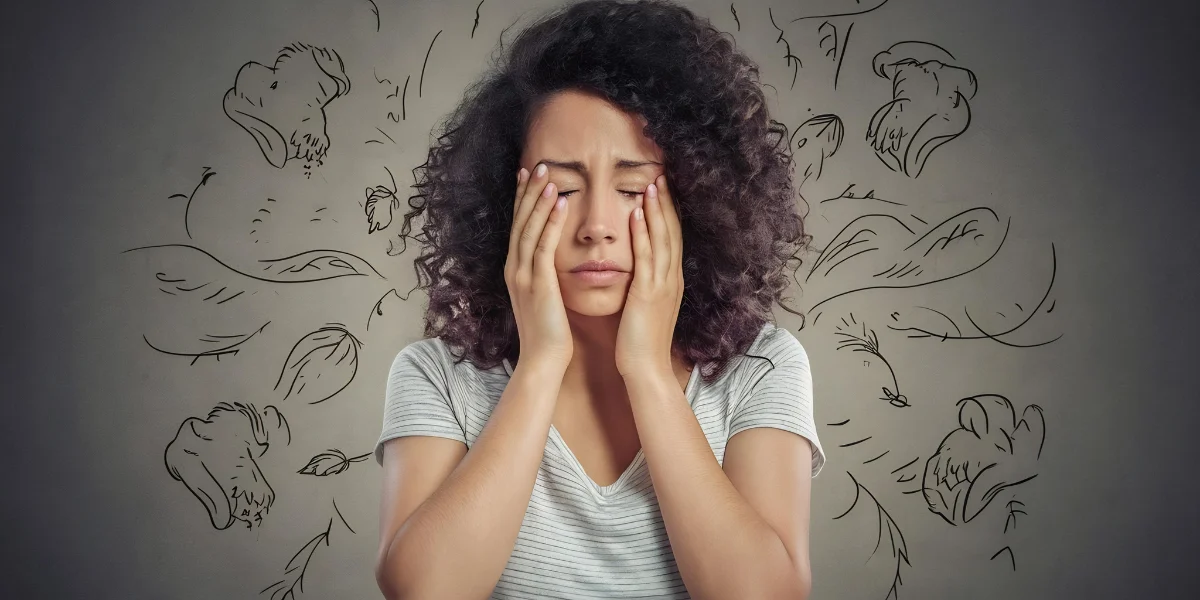
Generalized Anxiety Disorder Symptoms
Generalized Anxiety Disorder symptoms are often characterized by a “long-burn” of persistent, excessive worry that interferes with daily life. Common physical symptoms include consistent fatigue, muscle tension in the jaw or neck, and difficulty falling asleep. Mentally, GAD manifests through irritability, indecisiveness, and a constant fear of making the “wrong” decision. Because these symptoms keep the body in a state of “high alert,” individuals often struggle with concentration, feeling “wound up,” and experiencing digestive issues or chronic headaches. ShutterstockPanic Disorder
Panic Disorder involves recurrent, unexpected panic attacks that reach a peak within minutes. Unlike the steady state of Generalized Anxiety Disorder (GAD), these episodes are sudden and intense. People living with this condition often develop a secondary fear of the attacks themselves, leading them to avoid specific triggers or social settings. This avoidance can overlap with Social Anxiety Disorder, where the persistent fear of being judged by others creates intense self-consciousness and a total avoidance of public gatherings.Anxiety Attack Symptoms
While GAD involves constant worry, an anxiety attack is an acute spike in distress. Common anxiety attack symptoms include heart palpitations, a racing pulse, shortness of breath, and a sudden sense of overwhelming doom. You may also experience trembling, sweating, chills, or nausea. Understanding the anatomy of an anxiety attack is vital, as these episodes usually build up over time due to prolonged stress, distinguishing them from the more spontaneous nature of panic attacks or specific health anxiety symptoms.Anxiety Disorder Treatment
Finding the right anxiety disorder treatment is the first step toward regaining control. Effective management usually involves a combination of psychotherapy, lifestyle adjustments, and medication like SSRIs, SNRIs, or benzodiazepines for short-term relief. To reduce feeling of anxiety daily, experts recommend dietary adjustments—such as limiting caffeine—and regular physical activity to burn off nervous energy. Whether addressing phobia-related disorders or health anxiety symptoms, early intervention through a professional treatment plan is key to moving out of “survival mode.”Generalized Anxiety Disorder Therapy Treatment
The gold standard for generalized anxiety disorder therapy treatment is Cognitive Behavioral Therapy (CBT). This approach utilizes specific generalized anxiety disorder therapy techniques such as cognitive restructuring to challenge irrational thoughts and “worry exposure” to limit distress to specific times. Other effective methods include Acceptance and Commitment Therapy (ACT) and Mindfulness-Based Stress Reduction (MBSR). For those with specific fears, social anxiety disorder therapies focus on building confidence through role-playing and social skills training to improve public interactions.
Occasional anxiety is a normal part of life. You might feel anxious when faced with a problem at work, before taking a test, or when making an important decision. However, an anxiety disorder involves more than temporary worry or fear. For people with an anxiety disorder, the anxiety does not go away and can get worse over time. The symptoms can interfere with daily activities such as job performance, schoolwork, and relationships.
Generalized Anxiety Disorder (GAD) is characterized by persistent and excessive worry about a number of different things. Individuals with GAD may anticipate disaster and may be overly concerned about money, health, family, work, or other issues. GAD is diagnosed when a person finds it difficult to control worry on more days than not for at least six months and has three or more circulatory symptoms.
The Anatomy of an Anxiety Attack

While GAD involves a “long-burn” of constant worry, many individuals also experience acute episodes known as an anxiety attack. It is important to distinguish between the steady state of a disorder and these sharp spikes in distress.
Anxiety attack symptoms often include:
• A sudden sense of overwhelming panic or doom.
• Heart palpitations or a racing pulse.
• Shortness of breath or a feeling of choking.
• Trembling or shaking.
• Sweating and chills.
• Nausea or stomach cramps.
Unlike a panic attack, which is often sudden and can occur without a clear trigger, an anxiety attack usually builds up over time due to a perceived threat or a period of prolonged stress.
Symptoms of Generalized Anxiety Disorder (GAD)
The symptoms of GAD can be physical, cognitive, and behavioral. Because the “worry” is generalized, it often shifts from one topic to another.
Physical Symptoms
People often forget that an anxiety disorder manifests physically. Chronic worry keeps the body in a state of “high alert,” leading to:
• Consistent fatigue or feeling “wound up.”
• Muscle tension (especially in the jaw, neck, and shoulders).
• Difficulty falling or staying asleep.
• Irritability.
• Headaches and digestive issues.
Cognitive and Behavioral Symptoms

The mental burden of GAD is significant. It involves:
• Inability to relax or enjoy “quiet time.”
• Difficulty concentrating or the mind “going blank.”
• Indecisiveness and fear of making the “wrong” decision.
• Avoidance of situations that might trigger worry.
Related Anxiety Disorders
GAD rarely exists in a vacuum. Understanding other forms of anxiety is crucial for accurate anxiety disorder treatment.
Panic Disorder
People with Panic Disorder have recurrent unexpected panic attacks. These are sudden periods of intense fear that come on quickly and reach their peak within minutes. Because these attacks are so distressing, people often develop a fear of the attacks themselves, leading to significant changes in behavior to avoid triggers.
Social Anxiety Disorder
Social Anxiety Disorder is a persistent fear of being watched and judged by others. Social anxiety symptoms include:
• Intense self-consciousness in social settings.
• Fear that others will notice your anxiety (sweating, blushing).
• Avoiding social gatherings or places where people congregate.
• Difficulty making eye contact or speaking to strangers.
Health Anxiety Symptoms
Often referred to as “illness anxiety,” health anxiety symptoms involve a preoccupation with having or acquiring a serious, undiagnosed medical condition. Even when medical exams show nothing is wrong, the individual remains convinced they are ill, often misinterpreting normal bodily functions (like a gurgling stomach) as signs of a fatal disease.
Phobia-Related Disorders
A phobia is an intense fear of or aversion to specific objects or situations. While it is realistic to be anxious in some circumstances, the fear people with phobias feel is out of proportion to the actual danger caused by the situation or object.
Treatment of Anxiety Disorders
The good news is that anxiety is highly treatable. Anxiety disorder treatment typically involves a combination of psychotherapy, medication, and lifestyle adjustments.
Anxiety Disorder Therapy
Therapy is often the first line of defense. It provides a safe space to explore the roots of worry and develop coping mechanisms.
• Cognitive Behavioral Therapy (CBT):
This is the “gold standard” for generalized anxiety disorder therapy treatment. CBT teaches people different ways of thinking,
• Generalized anxiety disorder therapy techniques:
These include “cognitive restructuring” (challenging irrational thoughts) and “exposure therapy” (gradually facing fears).
These include “cognitive restructuring” (challenging irrational thoughts) and “exposure therapy” (gradually facing fears).
• Social anxiety disorder therapies:
These often focus on role-playing and social skills training to build confidence in public settings.
These often focus on role-playing and social skills training to build confidence in public settings.
Medication
In many cases, the treatment of anxiety disorders involves medication to balance brain chemistry.
• SSRIs and SNRIs:
These are typically used for long-term management.
These are typically used for long-term management.
• Benzodiazepines:
These may be used for short-term relief of acute anxiety attack symptoms, though they carry a risk of dependency.
These may be used for short-term relief of acute anxiety attack symptoms, though they carry a risk of dependency.
Specialized Therapy Techniques for GAD
When looking at generalized anxiety disorder therapy techniques, clinicians often use a multifaceted approach:
1. Mindfulness-Based Stress Reduction (MBSR):
Helping the patient stay grounded in the “now” rather than worrying about the “what ifs” of the future.
Helping the patient stay grounded in the “now” rather than worrying about the “what ifs” of the future.
2. Acceptance and Commitment Therapy (ACT):
Using strategies of acceptance and mindfulness to increase psychological flexibility.
Using strategies of acceptance and mindfulness to increase psychological flexibility.
3. Worry Exposure:
A technique where patients set aside a specific “worry time” each day, which helps prevent worry from bleeding into every hour of the day.
A technique where patients set aside a specific “worry time” each day, which helps prevent worry from bleeding into every hour of the day.
Practical Ways to Reduce Feeling of Anxiety
While professional help is vital, there are daily habits you can implement to reduce feeling of anxiety and regain control over your life.
1. Dietary Adjustments
Limit caffeine and alcohol. Caffeine is a stimulant that can trigger the “fight or flight” response, mimicking anxiety attack symptoms. Alcohol, while a sedative initially, can cause “rebound anxiety” as it leaves the system.
2. Physical Activity
Exercise is one of the most powerful ways to reduce feeling of anxiety. It releases endorphins and helps burn off the “nervous energy” produced by excess cortisol.
3. Sleep Hygiene
Anxiety and sleep have a bidirectional relationship. Lack of sleep increases anxiety, and anxiety makes it hard to sleep. Establishing a strict bedtime routine can help break this cycle.
4. Grounding Techniques
If you feel an anxiety attack coming on, try the 5-4-3-2-1 technique:
• Acknowledge 5 things you see.
• Acknowledge 4 things you can touch.
• Acknowledge 3 things you hear.
• Acknowledge 2 things you can smell.
• Acknowledge 1 thing you can taste.
The Path Forward: Seeking Help
If you recognize these symptoms in yourself, the most important step is to reach out. Whether it is Social Anxiety Disorder, Panic Disorder, or Generalized Anxiety Disorder, you do not have to navigate it alone.
Anxiety disorder therapy is not a sign of weakness; it is a tool for empowerment. By engaging in generalized anxiety disorder therapy treatment and learning to manage social anxiety symptoms or health anxiety symptoms, you can move from a state of constant “survival mode” into a life of peace and presence.
Early intervention is key. If you are struggling with persistent worry, talk to a primary care provider or a mental health professional today to discuss which anxiety disorder treatment plan is right for you.
FAQ's
The core characteristic of this anxiety disorder is persistent, excessive worry about various things, even when there is little or no reason to worry. Individuals often experience physical social anxiety symptoms like restlessness, fatigue, and muscle tension, which can make it difficult to reduce feeling of anxiety in daily life. Unlike a sudden anxiety attack, GAD symptoms are chronic and can fluctuate in intensity over time.
While the terms are often used interchangeably, anxiety attack symptoms usually build up gradually due to a perceived threat, whereas a Panic Disorder involves sudden, intense spikes of terror. An anxiety attack might involve a racing heart and “doom-scrolling” thoughts, but a panic attack is typically more physiological and overwhelming. Understanding these differences is a key part of generalized anxiety disorder therapy techniques, as it helps patients label their experiences accurately.
Physical anxiety attack symptoms often include a rapid heart rate, shortness of breath, trembling, and a “knot” in the stomach. These sensations can be so intense that they trigger health anxiety symptoms, where the individual becomes convinced they are having a medical emergency. Effective anxiety disorder therapy teaches patients to recognize these as temporary nervous system responses rather than physical illnesses.
Social Anxiety Disorder is much more than simple shyness; it is an intense fear of being judged or rejected in social or performance situations. Common social anxiety symptoms include extreme self-consciousness and a strong urge to avoid social gatherings altogether. Fortunately, social anxiety disorder therapies, such as Exposure Therapy, are highly effective at helping individuals re-engage with the world and reduce feeling of anxiety in public settings.
Phobia-Related Disorders involve an intense, irrational fear of specific objects or situations, such as heights or spiders, that is out of proportion to the actual danger. Unlike GAD, which is a broad sense of unease, these disorders are highly specific. The Treatment of anxiety disorders involving phobias usually focuses on desensitization, helping the individual gradually face their fear until the panic response diminishes.
Modern generalized anxiety disorder therapy treatment heavily utilizes Cognitive Behavioral Therapy (CBT) to challenge distorted thinking. Other generalized anxiety disorder therapy techniques include Mindfulness-Based Stress Reduction (MBSR) and Acceptance and Commitment Therapy (ACT), which help patients stay grounded in the present. These methods are essential for long-term anxiety disorder treatment, as they provide tools that work beyond the therapy office.
A comprehensive anxiety disorder treatment plan often combines talk therapy, lifestyle adjustments, and sometimes medication to manage chemical imbalances. Your anxiety disorder therapy will likely begin with an assessment to determine if you are dealing with GAD, Panic Disorder, or another related condition. The goal of any generalized anxiety disorder therapy treatment is to empower the patient with the autonomy to manage their own symptoms.
When someone experiences health anxiety symptoms, they often obsessively check their body for signs of illness, which only serves to increase their distress. Treatment of anxiety disorders focused on health anxiety involves “response prevention,” where the patient learns to stop the cycle of constant checking and reassurance-seeking. This is a core component of many social anxiety disorder therapies and GAD treatments that focus on uncertainty.
To consistently reduce feeling of anxiety, experts recommend a “bottom-up” approach that includes deep breathing, regular physical activity, and consistent sleep hygiene. These lifestyle habits support the work done in generalized anxiety disorder therapy techniques by keeping the nervous system regulated. When combined with professional anxiety disorder treatment, these daily practices create a strong foundation for mental resilience and long-term recovery.



Buxani Counseling Care
Hello ????
Can we help you?
Can we help you?
Open chat