

Causes of Menopause
The primary causes of menopause stem from the natural aging of the ovaries. As a woman approaches her late 40s, the production of estrogen and progesterone the hormones responsible for regulating the reproductive cycle begins to fluctuate and eventually decline. This depletion means the ovaries no longer release eggs monthly. These menopause causes trigger a systemic shift, affecting everything from bone density to cardiovascular health, officially marking the end of the reproductive years once menstruation has ceased for twelve months.Menopause Age
The typical age of menopause in women generally falls between 45 and 55, with 51 being the global average. However, the exact menopause age is highly individual and influenced by genetics, lifestyle, and medical history. Factors like smoking or certain health conditions can accelerate the decline of ovarian reserve. Understanding your family history can often provide a roadmap for when you might expect your own transition, helping you prepare for the physiological changes that lie ahead.Early Menopause Causes
While most experience this transition in their 50s, early menopause causes can trigger the process before age 45. These factors include “Primary Ovarian Insufficiency” (POI), where the ovaries stop functioning prematurely due to genetic or autoimmune issues. Other menopause causes include medical interventions like a total hysterectomy or cancer treatments such as chemotherapy and radiation, which can damage ovarian tissue. Identifying these causes early is vital for managing long-term health risks like osteoporosis or heart disease.Symptoms of Menopause
Common menopause symptoms vary widely but often begin with irregular periods and hot flashes. Beyond physical heat, many women experience significant mood swings during menopause due to shifting estrogen levels affecting brain chemistry. Furthermore, mental health after menopause is a critical focus, as lower hormone levels can lead to increased anxiety, “brain fog,” or sleep disturbances. Monitoring these symptoms of menopause helps in seeking timely support, ensuring that both physical discomfort and emotional well-being are addressed effectively.Causes of Bleeding During Menopause
Understanding the causes of bleeding during menopause is essential for safety. Once you have reached the one-year milestone of no periods, any spotting or heavy flow is considered abnormal. Common culprits include endometrial atrophy (thinning of the uterine lining) or non-cancerous polyps. However, because post-menopausal bleeding can occasionally signal more serious issues like endometrial hyperplasia or uterine cancer, it is a symptom that requires immediate medical evaluation to rule out underlying health complications.Therapy for Menopause
Modern therapy for menopause offers various ways to regain quality of life. Hormone Replacement Therapy (HRT) remains the gold standard for treating severe menopause symptoms, such as night sweats and vaginal dryness. For those seeking non-hormonal routes, low-dose antidepressants can stabilize mood swings during menopause, while Cognitive Behavioral Therapy (CBT) supports mental health after menopause. Discussing these options with a specialist ensures a personalized approach to managing hormonal shifts, bone health, and overall emotional resilience during this transition.
Menopause is a natural biological milestone, yet it remains one of the most misunderstood transitions in a woman’s life. Whether you are approaching your 40s or currently navigating changes, understanding the hormonal causes of menopause is the first step to managing this new chapter with confidence.
What is Menopause?
Menopause is officially diagnosed when a woman has gone 12 consecutive months without a menstrual period. It marks the end of reproductive years as the ovaries cease releasing eggs and significantly scale back hormone production.
The Average Menopause Age
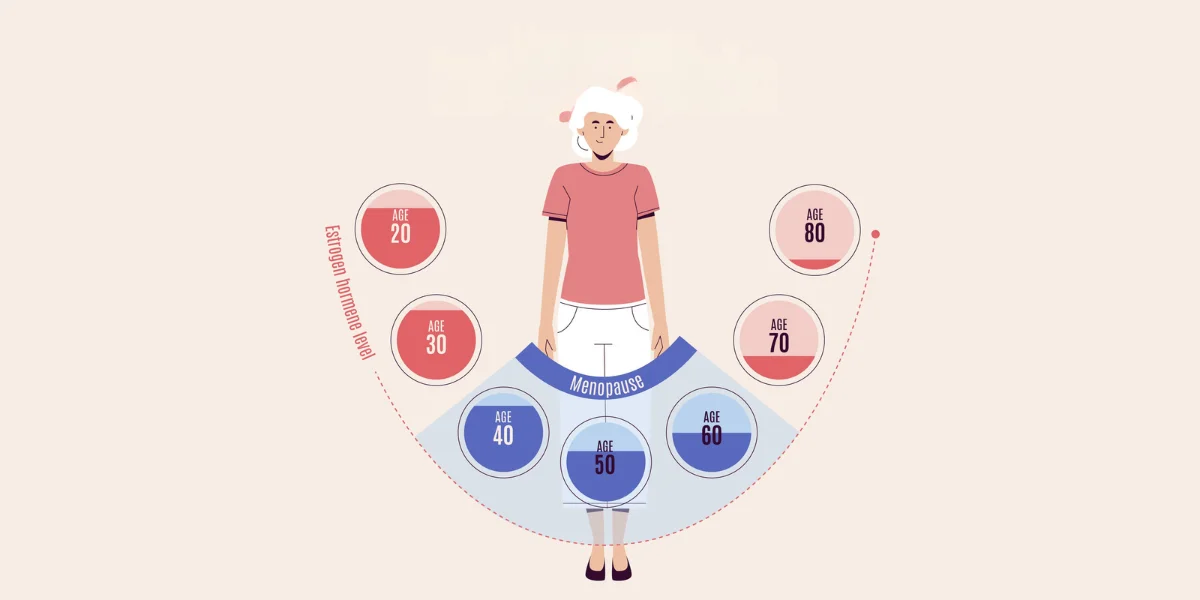
While every woman’s biological clock is unique, understanding menopause begins with recognizing the timeline; the typical age of menopause in women ranges between 45 and 55, with the average age being 51 in the United States. Factors like genetics, smoking, and overall health can influence exactly when your body begins this transition.
The Core Hormonal Causes of Menopause
To understand menopause causes, we have to look at the endocrine system. The transition isn’t an “off switch” but rather a gradual decline in the production of key hormones:
1. Estrogen:
The primary female sex hormone. As levels drop, it affects everything from bone density to skin elasticity and temperature regulation.
The primary female sex hormone. As levels drop, it affects everything from bone density to skin elasticity and temperature regulation.
2. Progesterone:
This hormone regulates the uterine lining. Its decline often leads to the irregular periods seen during perimenopause.
This hormone regulates the uterine lining. Its decline often leads to the irregular periods seen during perimenopause.
Early Menopause Causes
While natural aging is the most common factor, some women experience menopause before age 45. Early menopause causes can include:
1. Primary Ovarian Insufficiency (POI):
When ovaries fail to produce normal levels of hormones due to genetic factors or autoimmune diseases.
When ovaries fail to produce normal levels of hormones due to genetic factors or autoimmune diseases.
2. Induced Menopause:
Resulting from medical interventions such as a total hysterectomy (removal of the uterus and ovaries) or bilateral oophorectomy.
Resulting from medical interventions such as a total hysterectomy (removal of the uterus and ovaries) or bilateral oophorectomy.
Recognizing the Symptoms of Menopause in Women
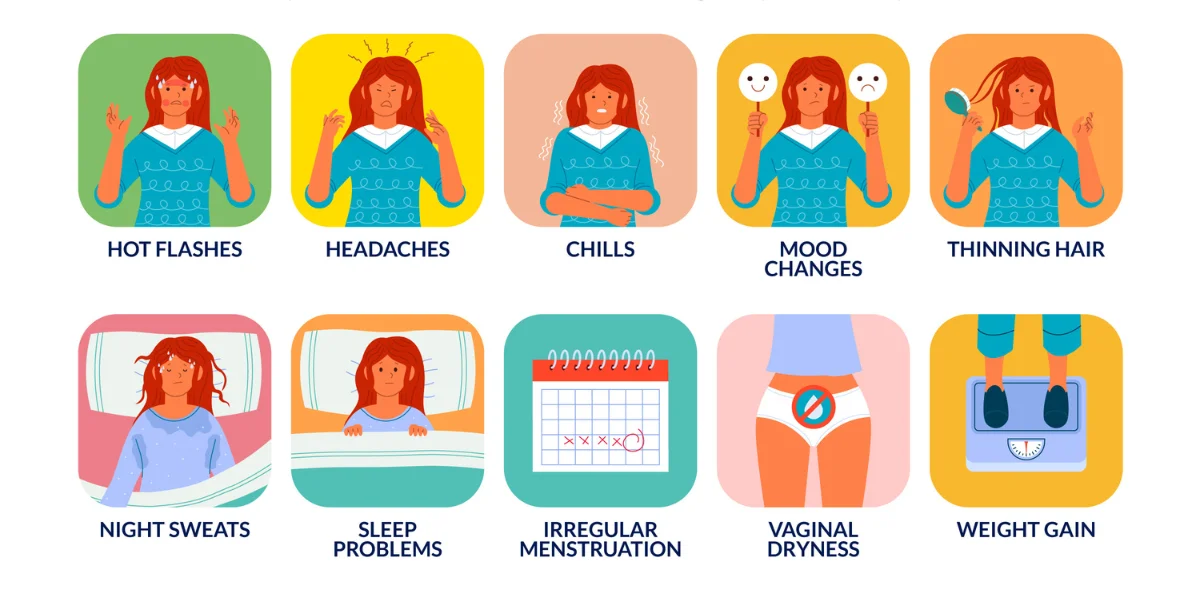
The “change” affects almost every system in the body. Identifying menopause symptoms early can help you seek the right support.
Physical Symptoms
1. Hot Flashes & Night Sweats:
Sudden waves of heat caused by the hypothalamus (the body’s thermostat) reacting to low estrogen.
Sudden waves of heat caused by the hypothalamus (the body’s thermostat) reacting to low estrogen.
2. Sleep Disturbances:
Insomnia or waking up due to night sweats.
Insomnia or waking up due to night sweats.
3. Weight Fluctuations:
Particularly an increase in abdominal fat.
Particularly an increase in abdominal fat.
Emotional & Mental Health
One of the most overlooked aspects is mental health after menopause. The drop in estrogen can impact serotonin levels, leading to:
1. Mood swings during menopause:
Rapid shifts from irritability to sadness.
Rapid shifts from irritability to sadness.
2. Brain Fog:
Difficulty concentrating or remembering simple tasks.
Difficulty concentrating or remembering simple tasks.
3. Anxiety and Depression:
New or worsening feelings of unease.
New or worsening feelings of unease.
Understanding Bleeding During the Transition
During perimenopause, periods become unpredictable. However, once you have reached menopause, any vaginal bleeding is considered abnormal.
Common causes of bleeding during menopause include:
1. Endometrial Atrophy:
Thinning of the uterine lining due to low estrogen.
Thinning of the uterine lining due to low estrogen.
2. Polyps:
Non-cancerous growths in the uterus or cervix.
Non-cancerous growths in the uterus or cervix.
3. Endometrial Hyperplasia:
A thickening of the lining, which can sometimes be a precursor to cancer.
A thickening of the lining, which can sometimes be a precursor to cancer.
4. Hormone Replacement Therapy (HRT):
Sometimes causes “breakthrough” spotting.
Sometimes causes “breakthrough” spotting.
• Note:
If you experience post-menopausal bleeding, consult a healthcare provider immediately to rule out serious conditions.
If you experience post-menopausal bleeding, consult a healthcare provider immediately to rule out serious conditions.
Managing the Change: Therapy for Menopause

You don’t have to “just deal” with the discomfort. Several options for therapy for menopause exist today:
1. Hormone Replacement Therapy (HRT)
HRT is the most effective treatment for hot flashes and bone loss. It involves taking estrogen (and progesterone, if you still have a uterus) to supplement what the body no longer produces.
2. Non-Hormonal Medications
For those who cannot take hormones, low-dose antidepressants or nerve medications can help manage mood swings and hot flashes.
3. Lifestyle and Holistic Shifts
1. Diet:
Increasing calcium and Vitamin D to protect bone health.
Increasing calcium and Vitamin D to protect bone health.
2. Exercise:
Weight-bearing exercises help mitigate the risk of osteoporosis.
Weight-bearing exercises help mitigate the risk of osteoporosis.
3. Therapy:
Cognitive Behavioral Therapy (CBT) has shown great success in managing the emotional toll of the transition.
Cognitive Behavioral Therapy (CBT) has shown great success in managing the emotional toll of the transition.
Summary Table: What to Expect
Stage | Description | Typical Duration |
Perimenopause | Irregular cycles, first signs of hot flashes. | 4 to 10 years |
Menopause | 12 months with no period. | The milestone date |
Post-menopause | The years following the milestone; symptoms may ease. | Rest of life |
Final Thoughts
Menopause is not a disease it is a transition. By understanding the hormonal causes of menopause and being proactive about your mental health after menopause, you can navigate these years with vitality.
If you are struggling with severe menopause symptoms, remember that medical science has come a long way. Reach out to a specialist to discuss a personalized plan that works for your body and lifestyle.
FAQ's
Menopause is defined as the point in time 12 months after a woman’s last menstrual period. It is a natural biological process marking the end of reproductive years, caused by a permanent decline in the ovaries’ production of reproductive hormones like estrogen and progesterone.
The normal menopause age typically falls between 45 and 55 years old, with the average age being 51 in the United States and approximately 46 to 48 in India. Factors such as genetics, smoking history, and overall health can influence exactly when an individual reaches this transition.
The first signs of menopause (technically the perimenopause phase) often include irregular periods, where cycles become shorter or longer. Other early symptoms include hot flashes, night sweats, sleep disturbances, mood swings, and vaginal dryness. These are caused by fluctuating estrogen levels.
The risks of Menopause Hormone Therapy (MHT), formerly known as HRT, depend on the type of therapy, the dose, and how long it is taken. Key risks can include an increased likelihood of blood clots, stroke, gallbladder disease, and, in certain formulations, a slightly higher risk of breast cancer. However, for many women under 60, the benefits for symptom relief often outweigh these risks.
Early menopause is menopause that occurs between the ages of 40 and 45. If it occurs before age 40, it is called Premature Ovarian Insufficiency (POI). Yes, it can happen to a woman in her 30s due to genetics, autoimmune diseases, smoking, or medical treatments like chemotherapy and bilateral oophorectomy (removal of both ovaries).
Buxani Counseling Care provides comprehensive, personalized mental health support in Miami and via telehealth, specializing in a wide range of services including individual, child, teen, couples, and LGBTQIA2+ therapy. Their approach integrates evidence-based practices like Cognitive Behavioral Therapy (CBT) with holistic methods such as mindfulness and art therapy to treat conditions like anxiety, depression, ADHD, and trauma. By offering tailored treatment plans, medication management coordination, and a supportive environment, they empower clients to build emotional resilience, improve coping skills, and achieve long-term mental wellness.
The difference lies in the timeline: Perimenopause is the “transition phase” where hormone levels fluctuate and symptoms begin, but periods haven’t stopped for a full year. Menopause is the specific milestone reached only after 12 consecutive months without a period.


Buxani Counseling Care
Hello ????
Can we help you?
Can we help you?
Open chat